Patients with a thin face often ask whether Ultherapy PRIME will leave their cheeks looking sunken. The short answer is that hollowing is not an automatic result of the device, but a risk that depends on the face and on how the treatment is designed . At BAID in Apgujeong, Seoul, the doctors decide whether to treat, how much and where only after examining the face in person. Sometimes the answer is to treat less, or not at all.
Where does the fear of hollow cheeks come from?
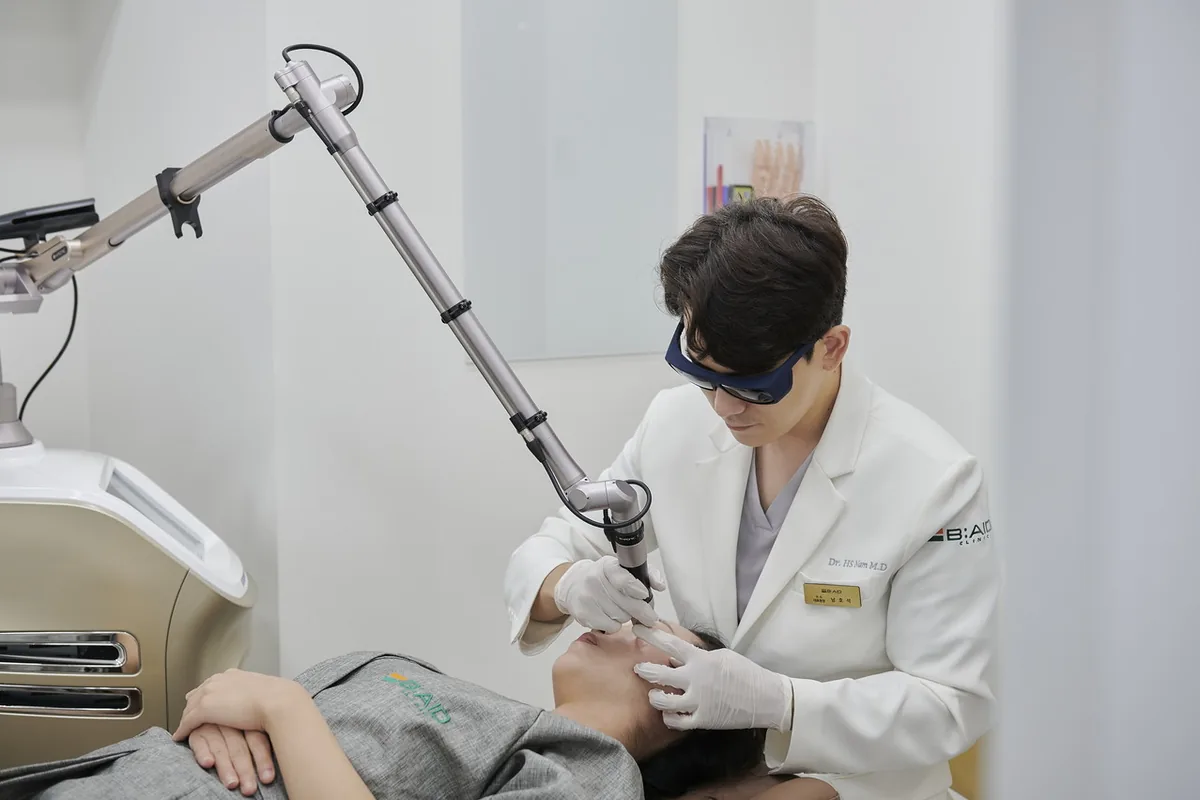
Dr. Nam Ho-seok, the lead physician at BAID, hears this concern often. Patients tell him, "I don't have much fat in my face, and I heard Ultherapy makes the cheeks sink, so I don't want it." His answer is that poor technique can indeed leave the cheeks hollow, and that what matters is how carefully the treatment is planned and performed. The risk depends on assessment and planning, and it cannot be brought down to zero.
He explains that Ultherapy heats the membrane that wraps the facial muscles. As that layer regenerates and tightens, the tissue sits more closely against the bone, which is why the treatment is used to define the jawline.
Which faces call for more caution?
When the BAID doctors describe cases in which they would not recommend Ultherapy PRIME, several situations recur:
- Little facial fat or tissue, where some doctors will not recommend it at all;
- areas that are already noticeably sunken;
- a similar treatment done recently, in which case waiting may be advised (the interval is discussed at consultation);
- young skin with little sagging to address.
Dr. Nam Ho-seok adds that a patient who is very anxious about hollowing, or who has other risk factors, may receive a more cautious recommendation.
What changes in the plan when the risk is higher?
Depending on the face and the doctor, a higher risk can mean a more cautious recommendation, a more limited treatment plan or no treatment. The doctors may reduce the number of shots, treat only certain areas, or, where sagging is slight, mark the treatment areas just before treatment and adjust the shot count from there. When tissue is very limited, they may not recommend it.
For a thin face, the emphasis is on a small amount and carefully chosen areas rather than a full-face session; how long results last differs between individuals and is discussed at consultation.
If a patient still wants a lifting treatment, one of the physicians explains that Soprano Titanium or ONDA (most often with the 3 mm tip) may be considered as a complement while Ultherapy PRIME plays a reduced role. The doctor may adjust the treatment areas and shot count after assessing the face, and this is explained at consultation.
How is the treatment plan tailored to each face?
At BAID, the treatment plan is marked in detail with the patient seated, before treatment begins. Dr. Nam Ho-seok considers tailoring that plan to each person an important part of the treatment.
He notes that in most patients one side sags more or carries more volume. During the marking he shows the patient a mirror and says something like, "This side is larger, so we'll start here." Seeing it together helps patients understand why the two sides may be planned differently.
Depth matters too. Ultherapy can work at deep, middle and shallow layers. He explains that the depths are chosen for each face: some plans use more than one depth, and treating only the deep layer carefully is also an option.
What helps the doctor at consultation?
Patients can help the doctor by sharing:
- which areas feel saggy and which already feel thin or sunken;
- how strongly they worry about hollowing.
Dates of any recent lifting treatment are also worth mentioning, since the interval is part of the decision.
Frequently asked questions
Q1) My face is thin. Should I avoid Ultherapy?
A1) Not necessarily. A thin face calls for more caution, and the doctors may reduce shots, limit the areas or advise against it. The decision follows an in-person examination.
Q2) My cheeks are already a little hollow. Can I still have Ultherapy?
A2) It depends on the face. Where cheeks are already sunken, the doctors may reduce the shot count, treat only certain areas, or advise against it. The approach is explained at consultation.
Q3) Should I tell the doctor I am worried about hollow cheeks?
A3) Yes. That concern is taken into account when deciding whether to treat and how much.
Depending on the individual, you may feel hot or tingling pain during Ultherapy Prime, and redness, swelling, bruising, and temporary numbness or altered sensation may occur after the procedure. In rare cases, burns or blisters may occur. Results and how long they last vary from person to person, so please consult thoroughly with your doctor before deciding.
Depending on the individual, you may feel heat during Titanium Lifting (Soprano Titanium), and temporary redness and stinging may occur after the procedure. In rare cases, burns or changes in skin pigmentation may occur. Results vary from person to person, so please consult thoroughly with your doctor before deciding.
Depending on the individual, you may feel heat or stinging during ONDA Lifting, and redness and swelling may occur after the procedure. In rare cases, burns or blisters may occur. Results and how long they last vary from person to person, so please consult thoroughly with your doctor before deciding.